Maternl©
  • EnglishUnited States
  • EspañolSpain
  • FrançaisFrance
  • ItalianoItaly
  • العربيةSaudi Arabia
  • PortuguêsPortugal
  • KiswahiliTanzania
  • HausaNigeria
  • YorùbáNigeria
  • አማርኛEthiopia
  • IgboNigeria
  • Afaan OromooEthiopia
  • isiZuluSouth Africa
  • SoomaaliSomalia
  • Fulani / FulaSenegal
  • chiShonaZimbabwe
  • isiXhosaSouth Africa
  • MalagasyMadagascar
  • हिन्दीIndia
  • বাংলাBangladesh
  • اردوPakistan
  • Bahasa IndonesiaIndonesia
  • Tiếng ViệtVietnam
  • TürkçeTurkey
  • فارسیIran
Home Why Maternl is needed today? Ask and Learn-Pregnancy and Newborn Loss Companion Record Your Visit. Empower Your Care. Understand It Clearly. Peer Support When You Need It For Sponsors Give Feedback Logout

Welcome to Maternl

To help us understand who we're reaching and better direct resources, please tell us which country you're visiting from. This is required to continue.

Why is Maternl needed today?
There are great differences throughout the world and within countries themselves in pregnancy outcomes as measured by stillbirth rtes, maternal mortality rates and infant mortality rates. Root causes for these differences include -but are not limited to-failure to understand the processes of pregnancy and the post-partum period, the lack of access to prenatal care centers and maternity centers and the unconscious bias and disparities in care ofvulnerable poulations. It is the singular goal of Maternl to address the universal need for all pregnant women and their families to have immediately available maternal and child healthcare information, education, and access to prenatal, maternity and post partum healthcare. Although it is a program for every woman, every family, it's mission is particularly focused on improving and facilitating early entry into prenatal healthcare services for vulnerable, disadvantaged and geogrpahocally diverse families, world-wide.

Maternl is different from other pregnancy apps. Maternl is a unique, visionary and transformative AI guided companion strengtened and shaped with experience, humanism, empathy, and deep understanding by its founder and creator. Maternl will be your trusted guide for pregnancy, newborn care and more. It helps you understand your pregnancy with clear and easily readable responses and helps you find where to get care in every country-with a personal letter of introduction to the center. Maternl strives to help you find the right help early and feel confident about your next steps- always private, free and anonymous with no identifiable data collected or stored.


Michael R Berman MD MBI FACOG
Founder and Creator


Mission, scope and reason for Maternl


It is the goal and mission of Maternl to reduce healthcare disparities by facilitating universal access to trusted healthcare support and resources. Maternl strives to address the universal need for all pregnant women and their families to have access to maternal and child healthcare information, education, and most importantly, access to prenatal, maternity and post partum healthcare. We are concerned about the biases to early entry into prenatal healthcare services for vulnerable, disadvantaged and geogrpahocally diverse families, and hope these programs will educate, empower and serve to make the user feel more confident and dignified whe seeking care- all in an effort to reduce significantly higher rates of maternal mortality, prematurity, neonatal and infant mortality among these populations, worldwide.
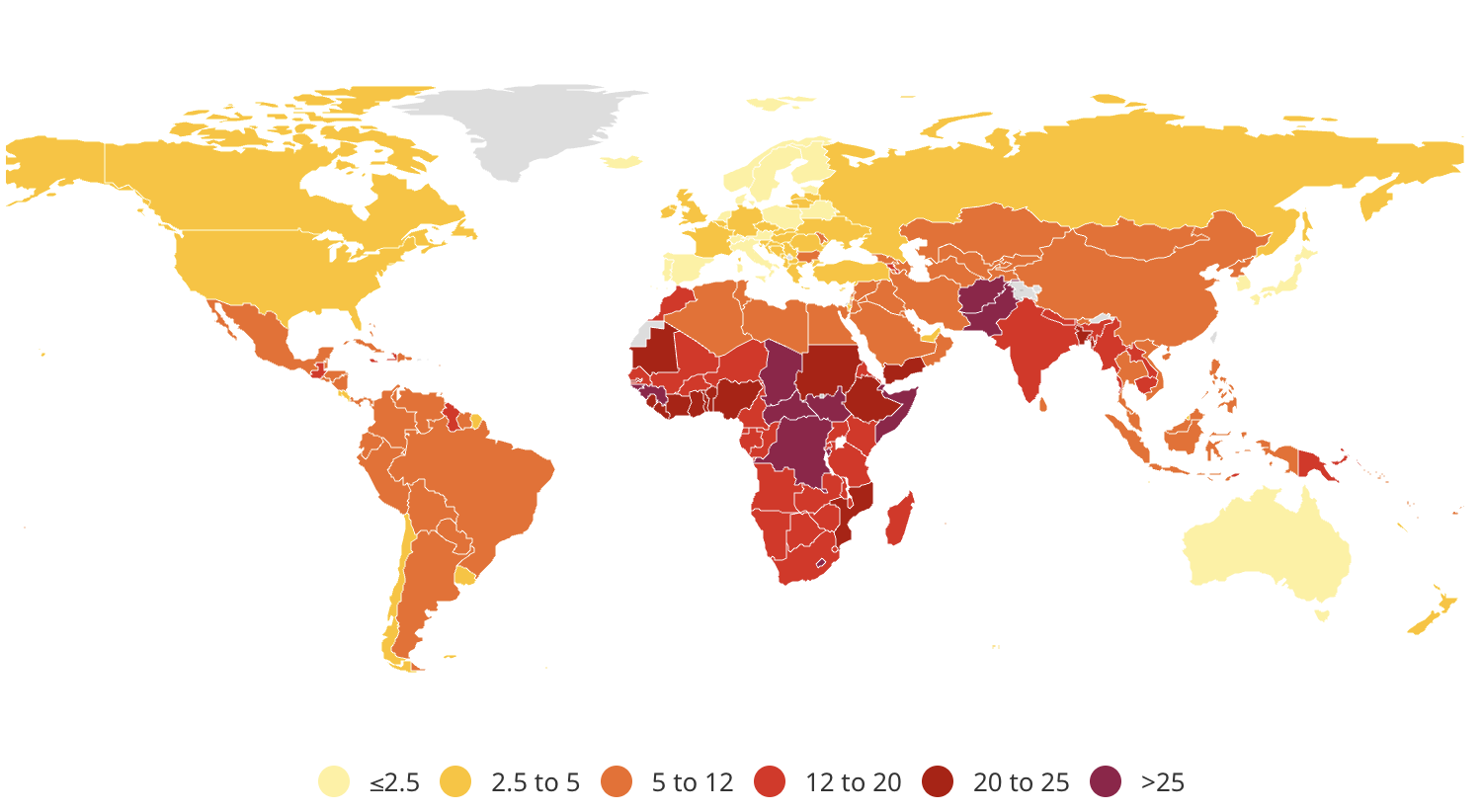

According to the latest UN Inter-Agency Group for Child Mortality Estimation (UN IGME) report, an estimated 1.9 million stillbirths occurred worldwide in 2023 — babies born with no sign of life at 28 weeks of pregnancy or later. This equates to a global stillbirth rate of 14.3 per 1,000 total births, or roughly 1 in 70 births ending in stillbirth — one occurring approximately every 17 seconds (Source: UNICEF Data, UN IGME Stillbirth Report 2024, United Nations Inter-agency Group for Child Mortality Estimation (UN IGME) 2020.).


Global Maternal & Newborn Health Statistics

Births, pregnancy loss, stillbirth, maternal mortality, and newborn mortality — a reference summary with primary sources.
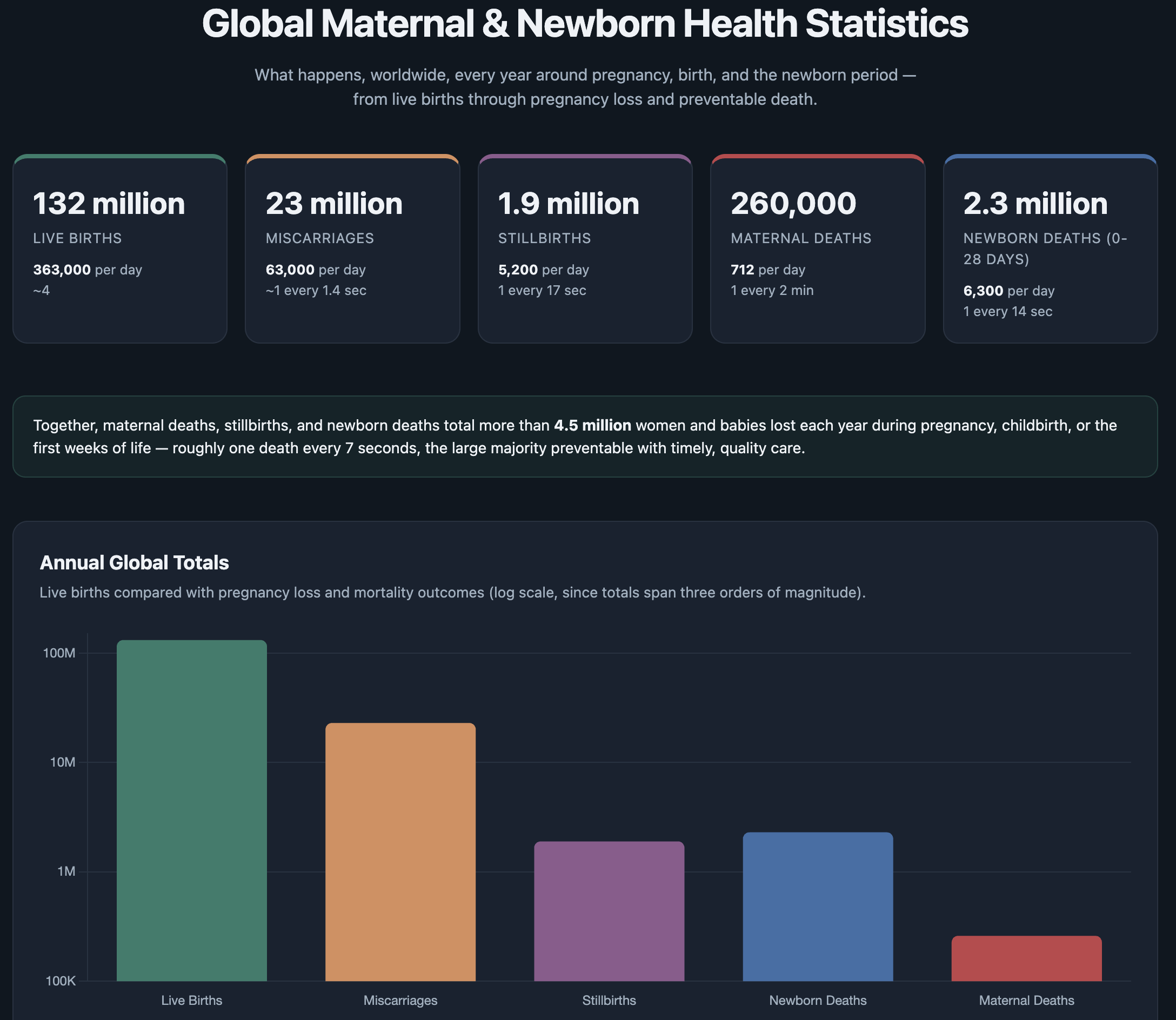
Global maternal and newborn health statistics chart


Global Number of Births Estimates

Around 132 million babies are born worldwide each year (2025 estimate), which works out to roughly 363,000 births per day, or about 4 births every second (Our World in Data, StatisticsTimes.com, UN World Population Prospects via IndexMundi).

This figure comes from UN World Population Prospects projections and has been fairly stable in recent years, though it’s expected to keep gradually declining as global fertility rates fall — birth totals are projected to peak around 2040–2045 at roughly 141 million per year before slowly declining afterward (Wikipedia).


Global Miscarriage Estimates

The most widely cited figure comes from a 2021 Lancet series, which estimated approximately 23 million miscarriages occur worldwide every year — roughly 44 every minute (The Lancet, University of Birmingham WHO Collaborating Centre).

In terms of risk per pregnancy, that same research puts the pooled risk of miscarriage at about 15.3% of all recognized pregnancies, and the WHO notes approximately one in four pregnancies ends in miscarriage (generally before 28 weeks) (PubMed, WHO). Estimates across sources vary somewhat depending on definitions and detection methods:

  • 10–20% of known/recognized pregnancies, per a WHO 2018 systematic review that found overall spontaneous abortion prevalence of 16.1% among women with at least one pregnancy (journal-imab-bg)
  • 1 in 10 women will experience a miscarriage in their lifetime, and about 1 in 4 will experience pregnancy loss over a lifetime (The Lancet)
  • Roughly 80% of miscarriages occur in the first trimester, before 12 weeks (Wikipedia)
  • A separate 2025 global burden analysis using GBD data estimated about 38.6 million pregnancy loss cases in 2021 (down from 47 million in 1990), reflecting a broader “maternal abortion and miscarriage” category and a declining incidence rate over time (PMC)

Given roughly 132 million live births occur globally each year, and miscarriage rates of 15–25% of recognized pregnancies, the 23 million figure lines up reasonably well as an order-of-magnitude estimate — though true numbers are likely undercounted since many early losses (before a pregnancy is even recognized) go unreported.


Global Stillbirth Statistics

According to the latest UN Inter-Agency Group for Child Mortality Estimation (UN IGME) report, an estimated 1.9 million stillbirths occurred worldwide in 2023 — babies born with no sign of life at 28 weeks of pregnancy or later. This equates to a global stillbirth rate of 14.3 per 1,000 total births, or roughly 1 in 70 births ending in stillbirth — one occurring approximately every 17 seconds (UNICEF Data, UN IGME Stillbirth Report 2024).


Key context

  • This marks real progress: the rate has fallen 37% since 2000, when it stood at 22.6 per 1,000 births and totaled about 3.1 million stillbirths annually (UN IGME Report).
  • The burden is highly uneven — nearly 80% of stillbirths occur in sub-Saharan Africa and Southern Asia, and 32% occur in low-income countries specifically (UNICEF Data).
  • Nearly 900,000 of these (46%) are intrapartum stillbirths — deaths occurring during labor — which are largely preventable with timely, quality obstetric care (UN IGME Report).
  • These figures likely undercount the true toll, since stillbirths are often underreported, especially in lower-resource settings; including earlier losses from 22 weeks onward (rather than the standard 28-week threshold) would raise the estimated total by about 40% (LSHTM).
  • If current trends continue, nearly 13 million more babies are projected to be stillborn by 2030, with half of those deaths in sub-Saharan Africa (UNICEF Data).

For scale, that 1.9 million stillbirths sits alongside roughly 132 million live births and about 23 million miscarriages worldwide each year — together forming a substantial global burden of pregnancy loss that Maternl Companion’s bereavement resources could help address.


Global Maternal Mortality

According to the latest UN estimates, about 260,000 women died worldwide during and following pregnancy and childbirth in 2023 — equivalent to over 700 deaths per day, or roughly one maternal death every two minutes (WHO, UNICEF Data).


Key context

  • This corresponds to a global maternal mortality ratio (MMR) of 197 deaths per 100,000 live births, down 40% from 328 in 2000 — an average annual reduction of about 2.2% (WHO).
  • The burden is extremely concentrated: over 90% of maternal deaths occur in low- and lower-middle-income countries, with sub-Saharan Africa and Southern Asia together accounting for about 87% (225,000) of deaths — sub-Saharan Africa alone makes up roughly 70% (WHO).
  • The disparity by income level is stark: the MMR in low-income countries was 346 per 100,000 live births versus just 10 per 100,000 in high-income countries (WHO).
  • Conflict and fragility sharply increase risk — 37 countries classified as conflict-affected or fragile accounted for 61–64% of global maternal deaths despite representing only 25% of global live births, with an MMR of 504 per 100,000 in conflict zones (WHO, UNFPA).
  • The global lifetime risk of maternal death for a 15-year-old girl in 2023 was estimated at 1 in 272 (UNICEF Data).
  • Progress falls well short of the UN Sustainable Development Goal of under 70 deaths per 100,000 live births by 2030 — reaching that target would require roughly 15% annual reductions, a pace rarely achieved historically (WHO).

Combined with the roughly 1.9 million stillbirths and 23 million miscarriages each year, a 2023 UN report noted that over 4.5 million women and babies die annually during pregnancy, childbirth, or the newborn period — equivalent to one death every seven seconds, mostly from preventable or treatable causes (UN News).


Global Newborn Deaths

According to the latest UN Inter-agency Group for Child Mortality Estimation data, an estimated 2.3 million children died within their first 28 days of life (the neonatal period) in 2023 — approximately 6,300 neonatal deaths every day, or one every 14 seconds (UNICEF Data, UNICEF Child Mortality Report 2023).


Key context

  • This corresponds to a global neonatal mortality rate of 17 deaths per 1,000 live births in 2023, down 53% from 37 per 1,000 in 1990 (UNICEF Data).
  • Newborns now make up a growing share of all under-5 deaths — rising from 41% in 2000 to 47% in 2023 — even as overall child mortality has declined, since progress on neonatal survival has lagged behind gains for older children (UNICEF: Levels and Trends in Child Mortality 2024).
  • Sub-Saharan Africa has the highest regional burden, with a neonatal mortality rate of 26 per 1,000 live births in 2023, followed by Central and Southern Asia at 21 per 1,000 (WHO).
  • About 80% of newborn deaths stem from three largely preventable and treatable causes: complications of prematurity, intrapartum-related events (including birth asphyxia), and neonatal infections (UNICEF).
  • Despite a 56% decline in neonatal deaths since 1990 (from 5.24 million to 2.3 million), the current rate remains well above the UN Sustainable Development Goal target of 12 or fewer deaths per 1,000 live births by 2030 (UNICEF Child Mortality Report 2023).

Taken together with the roughly 260,000 maternal deaths and 1.9 million stillbirths each year, this rounds out the picture of the roughly 4.5 million women and babies who die annually around pregnancy, birth, and the newborn period (UN News) — statistics squarely relevant to the global-health data the Maternl Companion platform is built to surface.


Global Maternal & Newborn Health Statistics Summary

Annual global totals and rates by category
Metric Annual Global Total Rate Key Source
Live births ~132 million/year ~363,000/day, ~4 per second Our World in Data, UN World Population Prospects via IndexMundi
Miscarriages ~23 million/year ~44/minute; 15.3% of recognized pregnancies (up to 1 in 4 by some estimates) The Lancet, WHO
Stillbirths (≥28 weeks) ~1.9 million/year 14.3 per 1,000 total births (1 in 70 births); one every 17 seconds UNICEF Data, UN IGME Stillbirth Report 2024
Maternal deaths ~260,000/year (2023) 197 per 100,000 live births; ~712/day; ~1 every 2 minutes WHO, UNICEF
Newborn (neonatal) deaths (first 28 days) ~2.3 million/year (2023) 17 per 1,000 live births; ~6,300/day; one every 14 seconds UNICEF Data


The Bigger Picture

Together, maternal deaths, stillbirths, and newborn deaths add up to more than 4.5 million women and babies lost each year during pregnancy, childbirth, or the first weeks of life — equivalent to one death roughly every 7 seconds, the vast majority preventable with proper care (UN News).


Equity Gaps Across All Categories

A consistent pattern runs through every one of these statistics: outcomes are dramatically worse in low-income and fragile-state settings.

  • Maternal mortality: 346 deaths per 100,000 live births in low-income countries vs. 10 per 100,000 in high-income countries — a 34-fold gap (WHO).
  • Geographic concentration: Sub-Saharan Africa and Southern Asia together account for ~87% of maternal deaths and ~80% of stillbirths, despite representing a much smaller share of global births (WHO, UNICEF Data).
  • Conflict impact: Countries in conflict or institutional fragility account for 61%+ of global maternal deaths while representing only 25% of global live births, with maternal mortality ratios roughly 5x higher than in stable, non-fragile settings (WHO).
  • Preventability: ~80% of newborn deaths stem from three treatable causes (prematurity complications, birth asphyxia, infections), and most stillbirths and maternal deaths are also considered preventable with timely, quality obstetric care (UNICEF).


Progress and Targets

All four mortality-related metrics have declined substantially since 2000, though gains have slowed:

  • Maternal mortality ratio down 40% since 2000 (328 → 197 per 100,000) (WHO)
  • Stillbirth rate down 37% since 2000 (22.6 → 14.3 per 1,000) (UN IGME Report)
  • Neonatal mortality rate down 53% since 1990 (37 → 17 per 1,000) (UNICEF Data)

None of these are on track to meet their 2030 UN Sustainable Development Goal targets (MMR under 70; stillbirth rate under 12; neonatal mortality under 12) at current rates of progress (WHO).


Compiled from publicly available data published by WHO, UNICEF, UN IGME, UNFPA, The Lancet, Our World in Data, and related sources cited inline throughout this document. Figures reflect the most recent internationally reported estimates (primarily 2023 data) as of publication.
Thursday, September 3, 2026


Learn more about Maternl


Most Important! -Why Trust Maternl?

One physician. Fifty years of caring for pregnant women and their families. A single, dedicated founder committed to your trust and your privacy.

I have created Maternl to be YOUR personal pregnancy companion. Unlike most commercially available pregnancy APPS and online programs, Maternl has one author and creator. Its passion-driven mission to improve the health and outcomes of pregnancy is derived from over fifty years of caring for pregnant women and their families as an obstetrician.

Two principles that I have embraced are the PRIVILEGE a physician has in caring for their patients and the TRUST required in the physician–patient relationship. I believe such TRUST is equally mandated in programs such as Maternl—and all other online health-related apps and programs. A program with a single, dedicated Founder / Author / Creator such as Maternl is best suited for this, as the user knows who is in charge, who is responsible for the program, and their background and philosophy. Maternl upholds all the tenets of trust I have learned and practiced. Maternl is committed to providing information in all its programs that is accurate and evidence-based—derived from researched, peer-reviewed journals, papers, organizations, and academic medical centers, rather than individuals, as sources. This will provide information, to the best of our knowledge, that is unbiased, up-to-date, and accurate. Maternl uses AI engines that always generate references, which can be further investigated.

Privacy: Our Commitment to You
Your privacy is of the utmost importance-particularly your privacy online. For this reason, I designed all features of Maternl to function seamlessly and effectively with complete anonymity and privacy. I do not ask for any identifiers, registration is not required to use any and all of the programs, and there is no storage of identified data. However, you may use your name, email address, or share your personal information at your will in the message boards or in communication to Maternl.

Michael R. Berman, MD, MBI, FACOG
Founder and Creator


Maternl Overview

Maternl is an AI supported comprehensive pregnancy information program. It is NOT a “symptom checker” and does not substitute for immediate contact with a clinician, emergency department or hospital. Any and all responses to symptoms or questions about how you are feeling are generalized - as Maternl never asks for or stores any of your personal health information - and cannot give you advice specific to your health condition(s) or history. Any immediate concerns must be addressed by your clinician or at an emergency department or labor and delivery unit.

Maternl is strengthened with professional human experience, feelings and understanding and will provide practical support, trusted, evidence-based information, and caring guidance throughout your pregnancy — always private, free and anonymous with no identifiable data collected or stored.

Maternl is a unique, visionary, and transformative companion shaped with humanism, empathy, and deep understanding.

Maternl is your trusted guide for pregnancy, newborn care and more. It helps you understand with clear and easily readable responses your pregnancy and helps you find where to get care in every country. Maternl© also gives you direct access to support services, so you can find the right help early and feel confident about your next steps.

  • Pregnancy and newborn information and learning
  • Geo-location of worldwide centers for prenatal and newborn care
  • An award-winning program for miscarriage, stillbirth, and neonatal loss
Created by Michael R. Berman, MD, MBI, FACOG, a Board‑Certified and Academic Professor of Obstetrics and Gynecology, Maternl© is an original and clinically grounded educational ally for pregnancy, postpartum recovery, newborn care, and for the most difficult experiences in pregnancy — miscarriage, stillbirth, and neonatal loss. Maternl© combines evidence‑based pregnancy guidance with geographic, location‑aware support so every woman, in every country can have access to information to improve their knowledge about their pregnancy and an avenue for access to care if they do not know where to go. The unique features of Maternl© derive from the founder's career-long endeavor to bridge both the digital divide and the pervasive disparities in access to care for vulnerable, minority and impoverished families, worldwide. Addressing all aspects of pregnancy; i.e. prenatal visits, labor aand delivery, post partum and the need for special care for those who have lost a pregnancy or newborn, Dr. Berman incorporates all that is expert, genuine and trustworthy to address maternal and perinatal mortality,globally.

The History of Maternl


The programs of Maternl© began as an international community of compassion, empathy, and support for families who have endured the tragedy of miscarriage, stillbirth, and neonatal or infant loss — HYGEIA. This vision was transformed into the Hygeia Foundation, Inc., an IRS‑approved 501(c)(3) non‑profit organization founded in 1995, which grew to exceed 30,000 members and became one of the most enduring online programs of compassion and support for perinatal loss. The Hygeia Foundation, Inc. has transitioned to become Hope After Loss (http://hopeafterloss.org). It is a thriving non‑profit with a Board of Directors, a Medical Advisory Board, and a Parents Board. Although no longer operated by Dr. Berman and the Hygeia Health Systems LLC, its mission continues to be fully supported and advocated by Hygeia Health Systems.

Selected Accomplishments of HYGEIA | MATERNL
  • One of the earliest Internet programs (est. 1995) devoted to pregnancy loss and neonatal death — and the only site of its kind created and moderated entirely by an Obstetrician‑Gynecologist.
  • Recognized in major media including The New York Times, The Boston Globe, The San Francisco Chronicle, the New Haven Register, and the Hartford Courant, and featured in interviews by Katie Couric (NBC Today Show) and Lisa Birnbach (CBS Early Show).
  • Finalist in the International Information Technology Competition, The Stockholm Challenge (2001, 2002). The GetCare program was presented to the Society for the Internet in Medicine (Geneva 2003; Prague 2005).
  • Implemented a Burial and Memorial Fund with the New Haven Health Department to help indigent families bury their children.
  • Founding member of the International Stillbirth Alliance, dedicated to understanding and preventing stillbirth through research.
  • Publication of Parenthood Lost: Health the Pain After Miscarriage, Stillbirht and Neonatal Death.
  • Masters Degree in Biomedical Informatics, Oregon Health and Science University with a Capstone on Personal Health Records for Underserved Communities
  • Clinical Professor, Yale University School of Medicine and Professor and Asscoaite Dean, Icahn School of Medicine at Mount Sinai Medical Center.
  • Medical Director of the Labor and Delivery Unit, Mount Sinai Beth Israel and Chief Patient Safety Officer, Mount SInai Beth Israel Medical Center
  • Awarded the United Hospital Foundation Award for Quality and Patient Safety, New York, New York, the New York State Perinatal Quality Collaborative (NYSPQC) Obstetrical Improvement Project’s Quality and Fellowship, Academy for Medicine and the Humanities, Icahn School of Medicine at Mount Sinai


The Evolution to Maternl©
Maternl©, now the successor to HYGEIA, realizes Dr. Berman's early vision of improving gaps and disparities in prenatal health care worldwide — particularly those affecting early entry into prenatal services and contributing to prematurity, neonatal mortality, and infant mortality.
By embracing Artificial Intelligence (AI) and Natural Language Processing (NLP), Maternl© becomes a singularly unique platform combining:

Pregnancy and newborn information and learning
Geo‑location of worldwide centers for prenatal and newborn care An award‑winning program for miscarriage, stillbirth, and neonatal loss Other propriatary programs-yet to be rolled out

What Makes Maternl© Different
Maternl© is an original, evidence‑based AI chatbot designed to support maternal, newborn, and child health. Its content is verified through trusted, peer‑reviewed sources and strengthened by the award‑winning Hygeia.org program for families who have experienced pregnancy or newborn loss.

  • Purpose‑built for maternal and infant health — focused exclusively on pregnancy, postpartum, and newborn care.
  • Safety‑focused by design — separates urgent warning signs and mental‑health concerns from routine questions.
  • Grounded in trusted sources — draws from recognized medical and public‑health references.
  • Educational, not diagnostic — supports learning and preparation; never replaces a clinician.
  • Designed for real‑world use — plain‑language answers, multilingual support, and preparation for meaningful conversations with care teams.


Important Notice


Maternl and its multiple modules are for educational use only — not medical advice. Maternl provides general information about pregnancy, postpartum, and newborn health. Responses are AI‑generated and may be incomplete or inaccurate. This tool does not provide medical advice, diagnosis, or treatment, and using it does not create a doctor–patient relationship. Always consult your OB‑GYN, midwife, or pediatrician for personal medical guidance. In an emergency, call 911.

Michael R. Berman, MD, MBI, FACOG
Founder and President

Ask Any Question

You can ask Maternl© any question about your pregnancy — from common symptoms to serious concerns — and get clear, easy-to-read answers. Any and all responses to symptoms are for the general population as Maternl never asks for or stores any of your personal health information and cannot give you advice specific to your health condition(s) or history. Maternl© introduces you to care programs, local resources, and tools that support you before birth, after birth, and during difficult moments like miscarriage, stillbirth, or newborn loss.


Global Reach

Maternl© is designed to be international and world-wide with multiple languages added frequently. Its goal is to help all families — no matter where they live — find clear information, early care, and support that is easy to understand. Created by an Obstetrician and Professor of Obstetrics, Maternl© uses simple tools, personal stories, and supportive guidance to help every pregnancy feel informed, prepared, and cared for.


What Makes Maternl© Unique

Purpose-built, physician-authored, and globally accessible

Maternl© can be distinguished from other health and pregnancy apps and programs by its inherent humanism, empathy and global reach. The curated health and medical information comes from only trusted and evidence-based resources such as academic universities, national and international organizations, and peer-reviewed journals and papers. Many other popular health and pregnancy apps rely on teams of medical professionals that might bias some of the information and responses.

Most pregnancy apps are built by companies optimizing for engagement, advertising, or data collection. Maternl was conceived and authored by one obstetrician, and every design decision reflects clinical accountability rather than commercial incentive.

Privacy is assured. • No Registration • No Data Collected • No Cookies • HIPAA-compliant • Always Free.

One physician, one accountable author

Unlike most commercial apps with no clear clinical owner, users always know who is responsible for Maternl, their background, and their philosophy of care.

Evidence-based by design

Content is derived from peer-reviewed journals, papers, recognized organizations, and academic medical centers — never anonymous individuals. AI engines always generate references that can be independently investigated.

Multilingual and global-first

Plain-language answers delivered in multiple languages, engineered for real-world use across countries, cultures, and low-bandwidth settings — reaching families conventional platforms leave behind.

Location-aware access to care

A custom designed and programmed geolocation of prenatal and newborn care centers worldwide with addresses, mapped location and directions from the users position. This turns information into action, guiding mothers who do not know where to go.

Safety-focused triage

Purpose-built architecture separates urgent warning signs and mental-health concerns from routine questions — educational, never diagnostic, and never a substitute for a clinician.

A legacy of compassion for loss

Anchored by the award-winning HYGEIA program for miscarriage, stillbirth, and neonatal loss — a dimension of care almost no competitor addresses. This module also contains poetry and the ability to download a personalized poem of loss and hope; a proven method to share solace and feelings.

A career devoted to maternal health and health equity

Michael R. Berman, MD, MBI, FACOG is a board-certified obstetrician-gynecologist and academic professor whose life’s work has been bridging the digital divide and the disparities in access to care for the world’s most vulnerable families. Maternl is the culmination of that career.

  • Clear, trusted answers to your questions.
  • Guidance to help you find prenatal care and maternity centers anywhere in the world.
  • Support and comfort through its award-winning program for families who have faced miscarriage, stillbirth, or newborn loss.

About the Founder and Creator

Michael R. Berman, MD, MBI, FACOG
Founder and Creator

A Personal Statement and biography of the Author, Founder and Creator

Maternl reflects my career-long profession as a physician, an obstetrician committed to the physical and emotional health of women, children and families. Its content is enabled by the agents of our humanity, empowered by our words, our language and ancestral songs of promise to heal when we cannot cure; the ultimate challenge to the bond between patient and doctor. In particular, my work recognizes and offers the attention and empathies required when parents experience the loss of a child through miscarriage, stillbirth or neonatal deaths.

Here I introduce my personal philosophy and original poetry which above all enables me to ask why even when we already understand how. Poetry permits me as a doctor of medicine, witness to the frailties of our humanity, to abet healing through the very core of what makes us human; our language and our personal emotions.

I believe that we who have taken the “Oath” to practice our sacred profession of medicine and we who have committed ourselves to the healing arts must do so with the imperative to respect the sanctity of health for all those we treat — with a sense of high privilege — for they are the flesh and blood and souls of our humanity, past, present and future, and we, by our choice, their guardians. Through my writings, poems, personal thoughts and unique programs, I strive to promote these tenets.


I received my Doctor of Medicine Degree from New York Medical College and my Master’s Degree in Biomedical Informatics from Oregon Health and Science University (OHSU) with an area of concentration on Personal Health Records.1 I completed my Post Graduate Residency Training in Obstetrics and Gynecology and a one-year fellowship in Maternal and Fetal Medicine at the Yale School of Medicine and Yale New Haven Hospital. From 2016–2020, I was Professor of Obstetrics, Gynecology and Reproductive Science and Associate Dean for Quality and Patient Safety for Graduate Medical Education at the Icahn School of Medicine at Mount Sinai, and Chief Patient Safety Officer and Ombuds at the Mount Sinai Health System in New York, New York. As Chief Patient Safety Officer, I had oversight for Quality and Safety at Mount Sinai Beth Israel Medical Center, New York Eye and Ear Infirmary, the Mount Sinai Downtown Ambulatory Care and Surgery facility at Union Square and The Blavatnik Family Chelsea Medical Center.

Prior to joining the faculty at Mount Sinai, I was in Clinical Practice in Obstetrics and Gynecology and Clinical Professor of Obstetrics, Gynecology and Reproductive Sciences at the Yale School of Medicine. In 1995, I founded the Hygeia Foundation for Perinatal Loss and Bereavement2 (now Hope After Loss) and am the author of numerous poems and essays documenting the human condition. I am also author of the book Parenthood Lost: Healing the Pain After Miscarriage, Stillbirth and Infant Death. In 2012, I joined the faculty and attending staff of the Mount Sinai Beth Israel Medical Center as the medical director of the Labor and Delivery Unit. I implemented the hospital’s first full-time laborist program, which provided a structured, collaborative, patient-centric approach to improving the quality, safety, and patient experience on the labor floor. In 2017, I was appointed Chief Patient Safety Officer for Mount Sinai Beth Israel Medical Center and Associate Dean for Quality and Patient Safety in Graduate Medical Education. In this role, I led efforts at the Icahn School of Medicine at Mount Sinai (ISMMS) and the Health System to meet the goals of the Clinical Learning Environment Review Program developed by the Accreditation Council on Graduate Medical Education.

Significant areas of organizational interest and specialized training which I have acquired are in the domains of Patient Safety and Root Cause Analysis Leadership, Just Culture, Adverse Event Disclosure, “Second Victim” Counseling, Physician Communication Skills, Ombuds, Patient Experience and Healthcare Disparities. Serving in the Ombuds Office for the Icahn School of Medicine at Mount Sinai and the Mount Sinai Health System, we provided a resource for faculty and students in the Graduate Medical Education programs to provide an impartial and informal venue for promoting fair and equitable conflict resolutions for those who have identified problems in their workplace or studies.

Currently, as Clinical Professor at the Icahn School of Medicine at Mount Sinai, I continue to teach third-year medical students on the multiple aspects of pregnancy loss, including thoughts on the need for a humanistic approach to the care of the patient. With my collective interests in informatics, quality and safety metrics and information technology, I developed several quality improvement software programs optimized for both in-hospital and community / ambulatory organizations. These programs can be customized and licensed to in-kind organizations. Information is available at Hygeia Health Systems, LLC.

1 Master’s Thesis: A Personal Prenatal Health Record for a Culturally Diverse Urban Community: a portable, secure and interactive electronic personal health record, designed specifically for pregnant women in underserved, urban communities.

2 The Hygeia Foundation for Perinatal Loss and Bereavement was a non-profit, tax-exempt organization whose mission was to comfort those who grieve the loss of a pregnancy or newborn child (from all causes; e.g. miscarriage, stillbirth, genetic disorders), to address disparities in access to healthcare services for medically and economically underserved families with respect, dignity and advocacy, and to provide advocacy and resources for maternal and child health. Its mission continues to thrive as Hope After Loss.

© 2026 Hygeia Health Systems LLC.
Maternl© is an educational resource and does not
provide you medical diagnosis, treatment or emergency care.
Contents Home